
No False Humility
The Torah tells us this week that "the man Moshe was more humble than any man" [Numbers 12:3]. When does the Torah tell us this? When his brother and sister, Aaron and Miriam, speak poorly of him. Moshe had separated from his wife due to his constant need to be in a...

The Value of Holding Back
In this week’s reading we learn about the inaugural offerings brought in the Tabernacle in the desert. Each of the tribes of Israel was given a day on which its leader would bring an offering. The tribes were told to come in a specific order, based upon the four flags...

The President Calls for Shabbos
No one quite expected the President of the United States to call upon Jews to observe Shabbos. But he did! In his proclamation in honor of Jewish American Heritage Month, President Trump wrote: In special honor of 250 glorious years of American independence and on the...

Sticking to the Deal
In this week's reading, Hashem tells us to lend money to others when they are in need. This is in addition to giving charity; it is a separate obligation, applicable to those who do not need outright gifts, but temporary help to meet the needs of the moment. Within...

The Evil of Gossip
This week we read about the Metzorah, who was afflicted with a spiritual type of leprosy. Our Sages teach that a person got this disease because of the sin of lashon hora, gossiping. What is so harmful about a bit of gossip, that a person got a punishment requiring...
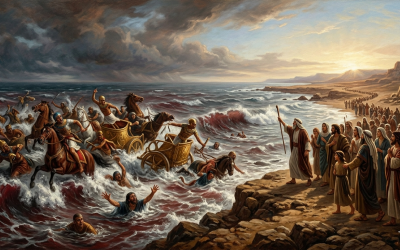
250 Plagues by the Sea
In the Passover Haggadah, we read the Ten Plagues, and Rebbe Yehudah’s acronym, and then learn that in reality, the Egyptians experienced much more than “only” ten plagues. Rebbe Yossi teaches that there were ten plagues in Egypt, but 50 at the sea. Rebbe Eliezer says...

It’s Not So Simple
Along with Elevation Offerings, Guilt Offerings, Flour Offerings and others, this week Aharon and his sons, the Kohanim, learn how to offer the Sin Offering. Last week we discussed, with regards to this offering, an exception to the rule: when one gave an offering for...

The Crime of Indifference
In this week’s reading, we learn about sin and guilt offerings in the Temple. One was called the “higher or lower” offering, as this offering depended upon a person’s financial situation. If a person entered the Temple without being in a pure state, or swore falsely...
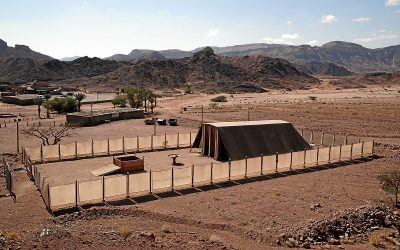
First Things First
After returning from atop Mt. Sinai, after Yom Kippur, Moshe calls the people to congregate. He is about to tell them to collect donations: gold, silver, and copper, colored cloths and skins, oil and spices. They were all to be used to construct the Tabernacle for...

Why did Moshe Smash the Tablets?
In this week's reading, we learn that Moshe received the entire Torah during 40 days on top of Mount Sinai, and received two Tablets that were miracles unto themselves (the Medrash tells us that letters engraved all the way through, similar to O, Q, B, etc. in...
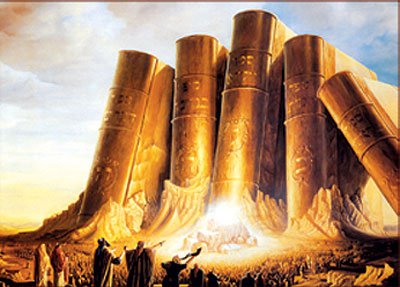
The Light of Torah Pervades All
Our reading this week begins, "And these are the judgments that you shall place before them" [21:1]. Rashi comments that a statement beginning "these..." rejects or supplants that which came before it, whereas "and these" means to add and connect. In this case, we...

But It’s Not Midnight!
This week, Moshe comes before Pharaoh to warn him of the coming Tenth and Final Plague: So says G-d: at roughly midnight, I will go though Egypt…and every firstborn will die…” [11:4] Moshe told Pharaoh that at “roughly” midnight—“Ka”-chatzos Halaylah—G-d will go...