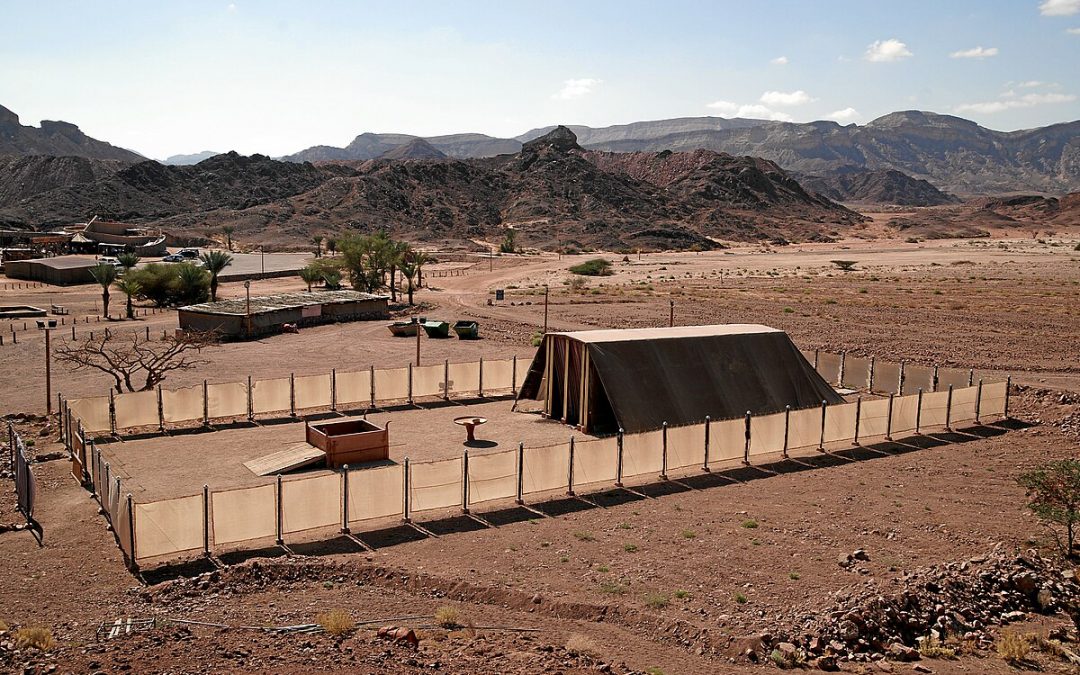
After returning from atop Mt. Sinai, after Yom Kippur, Moshe calls the people to congregate. He is about to tell them to collect donations: gold, silver, and copper, colored cloths and skins, oil and spices. They were all to be used to construct the Tabernacle for Hashem.
Before he begins, however, Moshe tells them something entirely different: to observe the Sabbath. “Six days you shall do creative labor, and the 7th Day will be holy for you, a Sabbath of rest to Hashem” [35:2]. Only afterwards does he go on to tell them about the donations and the construction.
Why was it necessary to give such a preface? The Jews had already been told to observe the Sabbath—they heard it at Mt. Sinai, before Moshe ascended. Was this a reminder?
The answer, though, is straightforward: someone might have thought that the holy work of building the Tabernacle overrode the Sabbath. He might imagine, “if we violate the Sabbath to save lives, shouldn’t we violate it to build the Tabernacle for Hashem?” To which Moshe said, absolutely not.
It is not enough to do something with the right intentions; one must also do it the right way. The ends do not justify the means.
There are people today who say that we should fit Torah to ourselves, but just the opposite is true. We do not set the priorities or the bounds. And that is what ensures the Torah remains within us, and within our families in the future.
Photo credit: Timna Park by M. Boesch, with CC BY-SA 4.0 license on Wikimedia