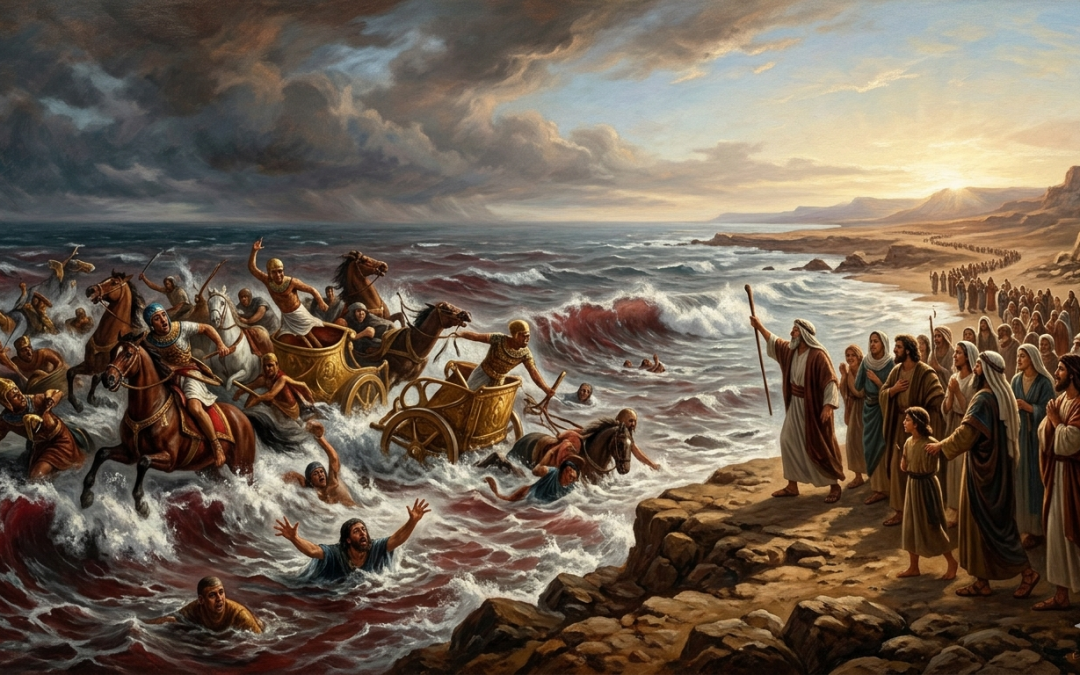
In the Passover Haggadah, we read the Ten Plagues, and Rebbe Yehudah’s acronym, and then learn that in reality, the Egyptians experienced much more than “only” ten plagues. Rebbe Yossi teaches that there were ten plagues in Egypt, but 50 at the sea. Rebbe Eliezer says that every plague consisted of four parts; Rebbe Akiva disagrees, and says each had five. He says that there were essentially fifty plagues in Egypt, and 250 at the sea.
Why is this important? Of all the Medrashim about the encounters with Pharaoh, slavery, the plagues, and the Exodus, why does the Haggadah tell us to all speak about the number of plagues, and at such length?
Rabbi Yechezkel Levenstein points out that, had He so desired, Hashem could certainly have subdued the Egyptians with only a single plague. But each thing that He did, each plague, elevated the Nation of Israel. And Rav Levenstein connects this to what we read immediately after these counts: “how many good, uplifting things the Holy One did for us!”
It is similar to what we then proceed to sing: Dayeinu, it would have been enough. Each thing would have been sufficient for us. If He had liberated us from Egypt, if He had judged them, if He had parted the sea for us, we would not have needed more, this would have been enough. And yet Hashem gave us more and more, each thing uplifting the entire nation.
I think we can find a hint to this idea in the Torah itself. After Moshe announces the plague of the death of the first-born, Hashem tells Moshe that “Pharaoh will not listen to you, in order to increase my wonders in the land of Egypt” [Ex. 11:9]. Each wonder that Hashem did for us benefited us, uplifted us, and Hashem specifically wanted there to be more.
We see a similar concept with the sheer number of Mitzvos, 613. As found in Medrash, Rebbe Chananya ben Akashya says, “the Holy One, Blessed be He, wanted to give merit to Israel, and for that reason increased the amount of Torah and Mitzvos.” What does this mean? It means that instead of one commandment to set up and run courts of justice, for example, there are sixty-six Commandments related to the courts, and also that one can be involved in studying Torah and doing Mitzvos throughout every day.
In our everyday lives, we know that time and effort make the end product more valuable. When a child takes the time to design a card for his mother, rather than buy one from the store, she appreciates it more although it looks decidedly less professional—because he made it himself, a labor of love.
So when we read these passages, we should think about Hashem doing all of these separate Plagues in order that we be uplifted, that we should see His investment in us to claim His nation for Himself. And may we feel uplifted, and driven to take more of the opportunities He has given us, all throughout the year.