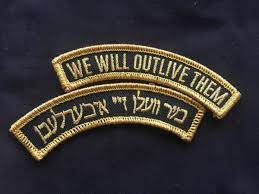
We Will Outlive Them, Too
In this week's Parsha, we learn the tragic story of Nadav and Avihu, the two sons of Aharon who died after offering a "strange fire" to Hashem. Moshe gives Aharon and his remaining sons special instructions: "do not grow your hair and do not tear your garments, that...

The Battle Continues
The Sabbath prior to the holiday of Purim is called Parshas Zachor, the portion of remembrance. There is a Biblical command to remember what Amalek did, and to blot out the remembrance of Amalek. There is even a prohibition against forgetting. The Torah portion that...

Just Passing Through
This week's reading, Pikudei, closes out the second book of the Torah. As Rashi says, it provides an accounting of the donations or the Tabernacle, of silver and gold and copper, and accounts for all of the holy vessels used in the Divine Service. Then the Torah tells...

Crushed for Brilliance
"And you shall command the Children of Israel, and they shall take to you pure olive oil, crushed for lighting, to elevate a light at all times" [Exodus 27:20]. The Torah requires that only the purest form of olive oil be used for lighting the Menorah in the Holy...
What Sets Jews Apart
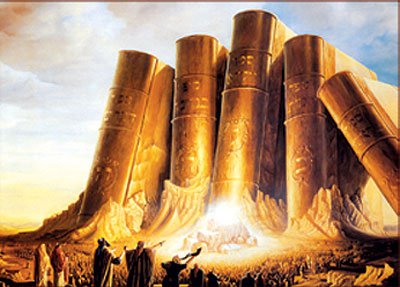
This week we read of the Revelation of the Divine Presence on Mt. Sinai, and the Ten Commandments (which actually contain fourteen of the 613 Commandments, and are more precisely translated as "the Ten Statements"). The Medrash says that Sinai is related to the...
When Free Will is Miraculous
Our reading begins, "And G-d said to Moses, come in to Pharaoh, for I have hardened his heart and the heart of his servants, that I may place these signs among them" [10:1]. This seems to contradict the idea of free will, which is a core concept in Judaism. Much as...
Carrying True Wealth
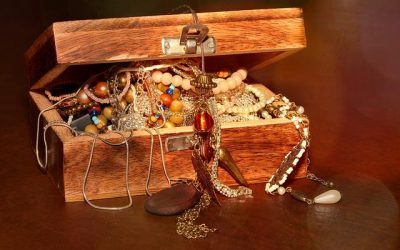
Rav Yaakov Galinsky zt'l tells a story he attributes to Rabbi Yisrael Mayer Kagan, the Chofetz Chaim. There was a gemstone dealer from St. Petersburg who traveled all the way to Danzig (today Gdansk, Poland) to a sale. Even today, this trip takes more than a day by...
Seizing the Moment
“And Yosef could no longer hold back, from all those standing around him…” [45:1] For months, Yosef had kept up appearances. He treated his brothers coldly, as if he did not know who they were. Now, however, he “could no longer hold back.” He declared himself to be...

Mirroring the Past
In this week's reading, Yosef is sold, enslaved, and taken to Egypt, where he is purchased by Potiphar, chief executioner to Pharoah. He soon earns Potiphar's trust, such that Yosef is entrusted to manage Potiphar's house and all his property [Gen. 39:1-4]. This works...
Joining Together
The Torah says that after Yaakov left his parents, fleeing from his brother Esav, "he came to the place" [28:11]. Rashi explains that he came to Mount Moriah, the same "place" mentioned previously, when Avraham brought Yitzchak to that same place, the site of the...
All this, and no more
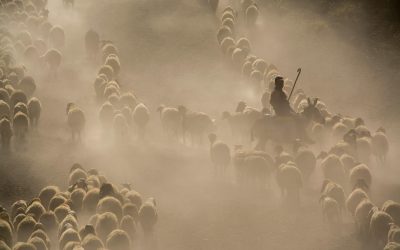
Rivka told her son Yaakov that he must take food to his father, Yitzchak, and receive the blessings that her husband intended to bestow upon their older son, Esav—but Yaakov was reluctant. If his father realized, he said, "I will have brought upon myself a curse, not...

When Fear is Required
One of the teachings of Rebbe Nachman of Breslov is found in a popular Jewish tune: "All the world is a very narrow bridge, and the main thing is not to be afraid at all." He was speaking about the physical world—because, when it comes to fear of Heaven, just the...